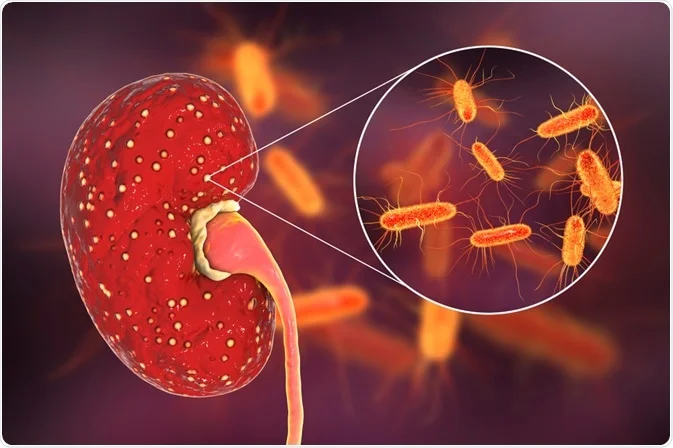
Pyelonephritis is a type of urinary tract infection (UTI) that affects one or both kidneys. It occurs when bacteria travel from the bladder up to the kidneys. This condition requires prompt treatment to avoid serious complications.
Causes of Kidney Infection
The most common cause is Escherichia coli (E. coli), a bacteria normally found in the intestines. Other causes include:
- Blocked urine flow (kidney stones, enlarged prostate)
- Vesicoureteral reflux (urine flows backward from the bladder)
- Catheter use or recent urinary procedure
- Weakened immune system
- Pregnancy or diabetes
Symptoms of Pyelonephritis
- High fever and chills
- Flank pain or back pain (near the kidneys)
- Painful or burning urination
- Frequent urge to urinate
- Cloudy or foul-smelling urine
- Nausea and vomiting
- Fatigue or confusion (especially in elderly patients)
Difference Between Cystitis and Pyelonephritis
- Cystitis: Infection is limited to the bladder
- Pyelonephritis: Infection has reached the kidneys, often more severe and systemic
How Is Pyelonephritis Diagnosed?
- Urine test (urinalysis): Detects bacteria, white blood cells, and pus
- Urine culture: Identifies the exact bacteria causing infection
- Blood tests: Check for infection in the bloodstream
- Imaging (ultrasound or CT scan): Used in complicated or recurrent cases
Treatment of Kidney Infections
- Mild cases: Oral antibiotics for 7–14 days
- Severe or hospitalized cases: IV antibiotics and fluids
- Pain management: Fever reducers and pain relievers
Symptoms usually improve within 2–3 days of starting antibiotics. Completing the full course is essential.
Complications If Left Untreated
- Kidney damage or scarring
- Kidney abscess
- Sepsis (life-threatening blood infection)
- Chronic kidney disease (CKD)
- Pregnancy complications
Who’s at Higher Risk?
- Women (shorter urethra)
- Pregnant women
- People with diabetes
- Individuals with a history of UTIs
- Elderly patients
- Those with a suppressed immune system
Prevention Tips
- Drink plenty of water daily
- Urinate frequently; don’t hold urine
- Wipe front to back after using the toilet
- Avoid scented hygiene products near the genitals
- Urinate after sexual activity
- Treat bladder infections early before they spread
When to See a Doctor
- Severe back or side pain
- High fever with chills
- Vomiting and inability to keep fluids down
- Blood in urine
- Symptoms not improving within 48 hours of antibiotics

Dr. Anuja Porwal
MBBS, DNB Medicine & DNB Nephrology
Director of Nephrology at Fortis Hospital, Noida